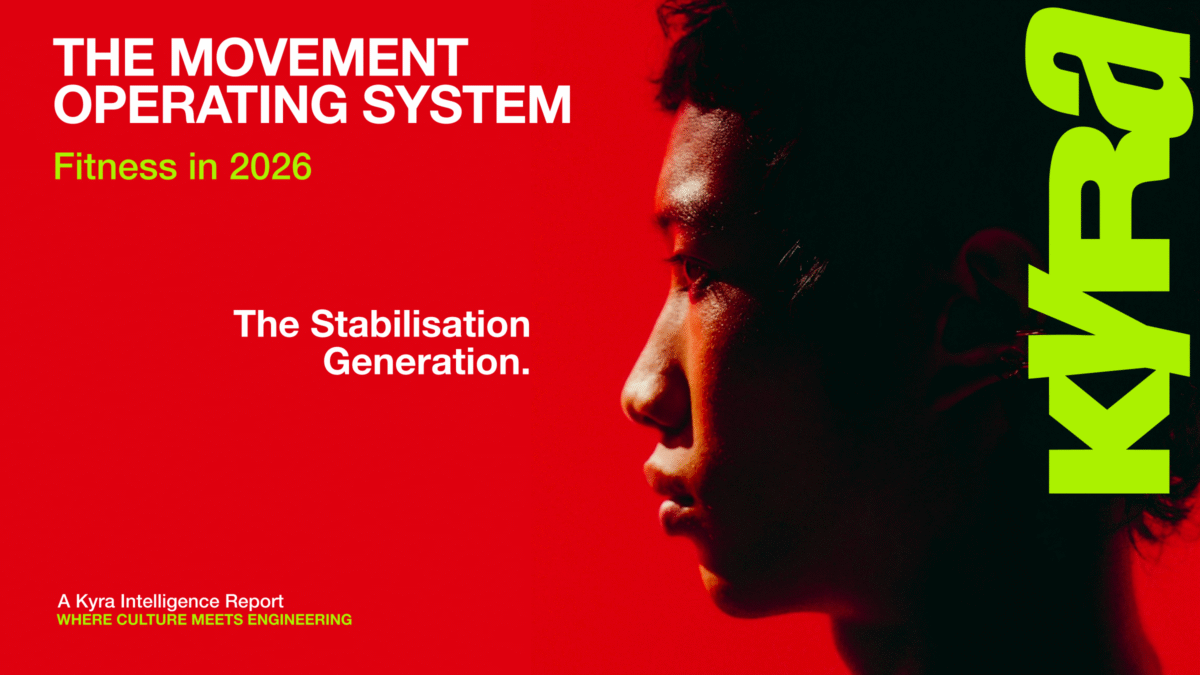
In one of the most extensive analyses of TikTok content ever compiled, it’s confirmed that fitness has entered a new era. We are now seeing the ‘Stabilisation Generation’ – those no longer focusing on peak performance, transformation or visible progress. Instead, prioritising stability, creating predictable routines, resilient communities and functional wellness habits that help them stay functional inside lives shaped by sustained pressure.
Conducted by Kyra, the first AI-engineered operating system for creator ecosystems, 2.2 billion TikTok videos were analysed to understand how fitness behaves and shift shapes for people in 2026. Combined with an independent qualitative survey of Gen Z and Millennial participants, the research has highlighted how wellness has shifted from transformation to stabilisation, reflecting a generation responding to structural pressures such as mental health challenges, burnout, and financial stress.
Fitness has moved from aspiration to self-preservation
The research clearly proves that across fitness, wellness, performance, and recovery culture, the clear drive is no longer aspiration but economic, emotional and cognitive pressure that is determining the habits people continue to repeat once novelty fades and motivation runs out.
What emerged in the data is not a trend cycle, but a structural shift with recovery at its core:
- Night routine content is up 46% in a single quarter
- Sleep content pulls more than 31.5 million weekly views
- Nervous system content is growing 46% year-on-year
- Strength training is accelerating at nearly 50%
- Yoga content has doubled
- Sober content is growing at 30% velocity
- Creatine content is up 42%, particularly among women
Where these behaviours can look like self-improvement in isolation, at scale they reveal something more fundamental: a generation building rituals to stay steady in a world that feels unreliable by default.
Why the peak optimisation era is over
The research shows that the majority are no longer trying to become the best version of themselves, but trying to stay operational. Fitness is clearly now not simply a lifestyle choice but protection, with healing and recovery content now pulling nearly 18 million weekly views, while regulation-focused behaviours continue to accelerate.
Sleep, nervous system regulation, cold exposure, breathwork, red light therapy, and structured wind-downs have moved the wellness industry from an indulgence in culture to a source of core systems keeping people functional.
- 94% report mental health challenges in an average month
- 86% say they feel burnt out, many before the age of 25
- 46% have a formal mental health diagnosis
- 70% feel too anxious about money to sleep
- 50% cannot comfortably cover daily expenses
Community is integral and influencing the de-influenced
What was apparent throughout the content is that community now exists to stabilise behaviour, not to perform identity. Morning run clubs, sober bars, pickleball and padel leagues, and low-stimulus coffee meetups are replacing traditional nightlife.
- Run club content continues to grow at 243k weekly views
- 46% plan to stay alcohol-free for the year ahead
- 61% drink less to support mental health and sleep
Reducing noise has become a rational response to financial pressure, climate anxiety, and algorithm fatigue. Anti-hauls, second-hand buying, cozy routines, and quiet rituals dominate:
- 90% buy second-hand
- 88% report being de-influenced
- BookTok still pulls 66.8 million weekly views
How brands can reshape for routine
The report reveals a shift of people for whom unstructured time feels unsafe. Predictable mornings, repeatable evenings, and contained schedules outperform chaos and reinvention in their online content -“day in the life” videos no longer celebrate overload, but containment. And this is impacting how fitness brands need to show up:
- Performance clothing brands that integrate into daily life outperform expressive, aesthetic-led activewear.
- The fastest growing footwear brands position performance as preservation, not aggression. Softer language, emotional relevance, and everyday comfort outperform “go harder” narratives.
- Fitness tracking via wearables has shifted from optimisation to reassurance, with platforms interpreting data gently to reduce cognitive load accelerating faster than those that push targets and milestones.
- With supplements, single-ingredient, legible products that slot into routine and emphasise maintenance outperform complex, narrative-heavy formulations.
- Commitment to gyms has loosened. Spaces that accommodate irregular attendance and hybrid routines outperform models that demand loyalty.
- With fitness apps, infrastructure beats instruction. Platforms that quietly support fragmented routines outperform prescriptive programmes.
The defining insight for 2026
Through this extensive analysis it’s clear that, for many now, fitness is no longer organised around extremes or ideals. It is organised around endurance of a different kind: the ability to keep participating without escalating pressure in their lives further.
What survives is what people can return to without renegotiating who they are or what they intend to become. This marks a structural reorganisation of the fitness and wellness category and how brands can provide relevant meaning in the coming year.
Dev Karaca, co-founder and CEO at Kyra, says: “At Kyra we have developed unique AI technology that allows us to watch creator content and behaviour in real time and at massive scale. Working with some of the world’s biggest brands, we don’t predict the future by guessing – we predict it by analysing the present as trends crystalise. What we’re seeing right now across fitness and wellness is clear: the transformation era is over. Younger generations aren’t chasing extremes and peak performance, they’re looking to stay grounded through fitness that fits into their real life. The brands that will stay relevant are emphasising repeatability and regulation over peak performance and spectacle.”
The findings are drawn from new landmark research by Kyra, The Movement Operating System: Fitness in 2026, a two-phase report analysing how fitness behaves culturally, commercially, and behaviourally for the new generation. Kyra is a proprietary, AI-driven operating system for analysing creator ecosystems. Used by some of the biggest brands on social, such as H&M, Shark Ninja and Coach, Kyra reflects the importance of influencer marketing for brands by tracking cultural behaviour in real time at scale across creators, content, products and rituals.
To access get information on the research or media enquiries please contact Propeller Group on kyra@propellergroup.com
Founded in 2017, Kyra is the first AI-engineered operating system for creator ecosystems, a model designed to bring structure, predictability and cultural coherence to how brands show up in influence. Built by a former accountant and a rocket scientist, Kyra combines real-time intelligence across 1.7 billion social accounts with a system for scaling consistent presence in culture, empowering global brands including H&M, Coach and Shark Ninja to build sustainable and measurable performance.
Methodology
This report draws on two sources. A survey of 950 Gen Z and Millennial respondents across the UK and US captures how people consciously describe their relationship with fitness today – what they value, recognise, and prioritise.
Alongside this, Kyra’s trajectory analysis observes behaviour at scale, analysing billions of TikTok videos across over one billion creator accounts, measured year-on-year across three consecutive Q4 periods. Q4 strips away novelty so what grows here earns its place in routine.
kyra@propellergroup.com
Kyra