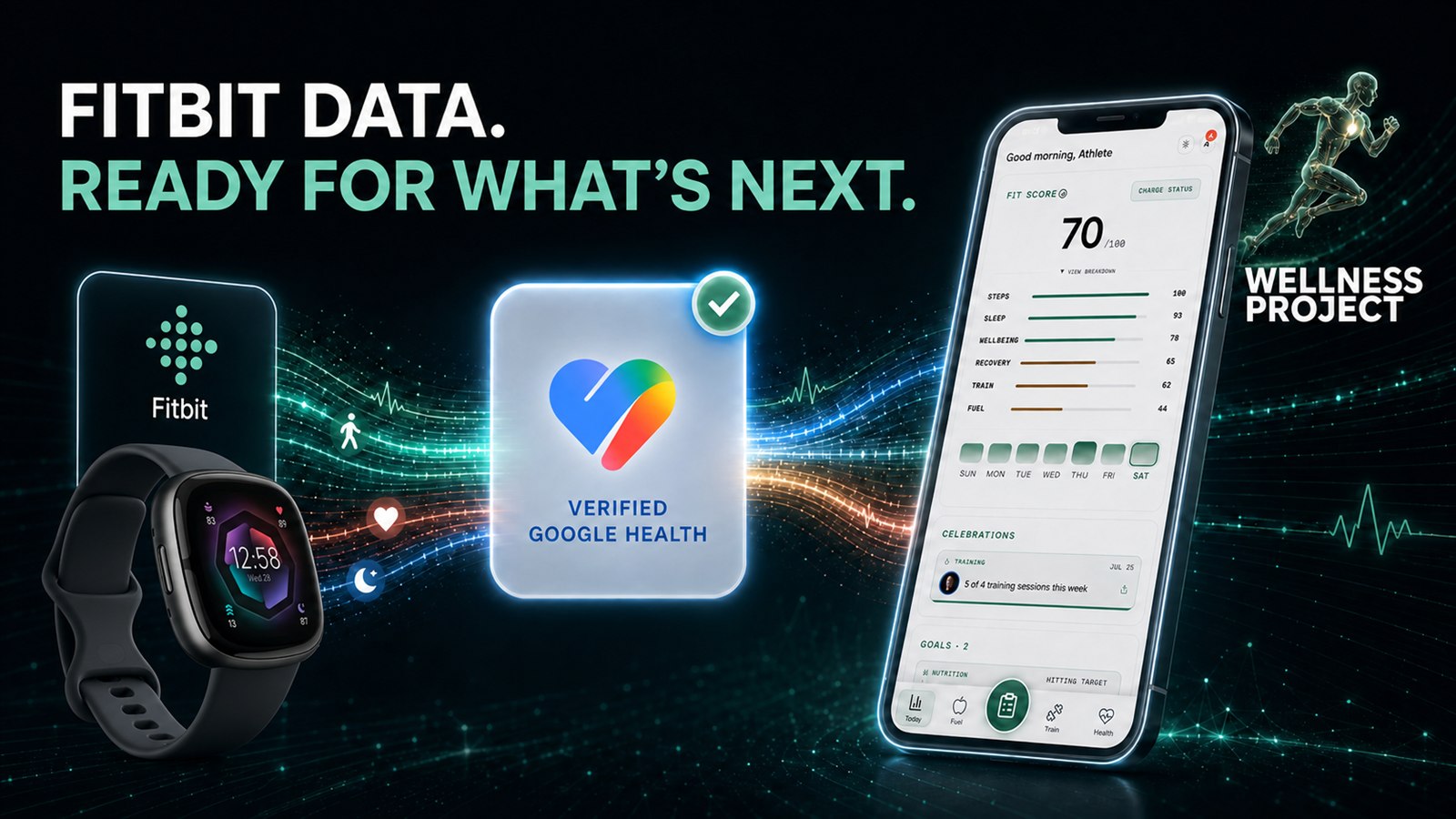
Wellness Project, an AI-powered health and fitness platform, today announced the launch of its direct integration with the new Google Health API, giving Fitbit and Pixel Watch users a new way to bring their health data into a unified, AI-ready health record.
The launch comes ahead of a major transition for the Fitbit ecosystem. Google will retire the legacy Fitbit Web API in September 2026 as it moves developers to Google Health, its new infrastructure for health and fitness data.
Existing Fitbit integrations do not automatically carry over. Developers must migrate to Google’s new OAuth infrastructure, request new Google Health scopes, and, for most health data scopes, complete Google’s restricted-scope verification process before making those integrations broadly available.
As a result, some apps that have historically connected to Fitbit may not make the transition before the legacy API is retired. Users who rely on those apps to analyze, coach from, or combine their Fitbit data with other health information may find themselves looking for new options.
Wellness Project has completed Google’s verification process for its Google Health integration and is positioned to support Fitbit and Pixel Watch users through the transition.
With the new integration, Wellness Project users can connect their Google account and sync supported Fitbit and Pixel Watch data alongside information from the other health, fitness, nutrition, workout, and body composition tools they use.
The result is a longitudinal health record designed to remain useful even as devices, platforms, and AI tools change.
“People spend years building a health history, but that history is often trapped across different devices and apps,” said Bryan Barash, founder of Wellness Project. “Google is taking Fitbit into a new era. We think users should be able to take their data with them too, combine it with the rest of their health story, and decide how they want to use it.”
From Health Tracking to Health Intelligence
Google’s transition from the Fitbit Web API to Google Health comes as wearable companies expand beyond tracking into broader AI-powered health platforms.
Wellness Project is built around a complementary idea: the intelligence layer does not have to belong to a single device or ecosystem.
The platform combines data across sleep, activity, workouts, nutrition, recovery, heart health, and body composition into one longitudinal record. Its AI can then reason across that history to help users understand relationships between different parts of their health and fitness.
A user might ask how sleep has affected recent training, whether recovery is changing as workout volume increases, or how nutrition and exercise are influencing body composition over time.
Wellness Project also allows users to securely connect their health record to compatible AI assistants through its Model Context Protocol integration. That means users can analyze their connected health and fitness data inside Wellness Project or work with it through tools including ChatGPT and Claude.
Access is permissioned and can be revoked by the user.
“Your watch will change. Your apps will change. The AI you use will change,” Barash said. “Your health history should not have to start over every time they do.”
Building an Open Personal Health Layer
The Google Health launch expands Wellness Project’s broader approach to health data interoperability.
Rather than asking users to standardize around one wearable or health platform, Wellness Project is designed to connect the tools they already use and create a common intelligence layer across them.
That model is becoming more relevant as wearable and technology companies race to turn longitudinal health data into personalized coaching, recommendations, and care.
As Fitt Insider recently noted in its coverage of Google folding Fitbit into Google Health, the competition is increasingly shifting toward the intelligence layer and the broader race to build a Personal Health OS.
Wellness Project approaches that shift from the user’s perspective. The platform is designed so health data can remain useful across devices and AI systems rather than being valuable only inside the ecosystem that collected it.
That means a Fitbit or Pixel Watch user can connect Google Health to Wellness Project, combine that data with the rest of their health and fitness history, and then choose where they want to interact with it.
“People should not have to pick one company to own their entire health experience,” Barash said. “They should be able to use the devices they like, the apps they trust, and the AI tools they prefer while keeping their health history connected.”
The Google Health integration is available now to Wellness Project users.
Wellness Project is an AI-powered health and fitness platform built to help people bring their health data together, understand it in context, and use it wherever they choose.
The platform connects data across wearables, workouts, nutrition, sleep, recovery, body composition, and other health sources into a unified longitudinal record. Users can explore their data through Wellness Project’s AI tools or securely connect it to compatible AI assistants including ChatGPT and Claude.
Wellness Project is available on iOS, Android, and the web.
bryan@wellnessproject.ai
Wellness Project