Bionic athletes are on the horizon.
iRobot. Augmenting humans, AI-enabled exoskeletons are proliferating. Assisting stroke, paralysis, and MS sufferers, suits like Ekso’s have been FDA cleared for a decade, while Exia and HeroWear’s gear gives manual laborers a lift.
Entering sport, exoskeletons now deliver superhuman performance to everyday athletes.
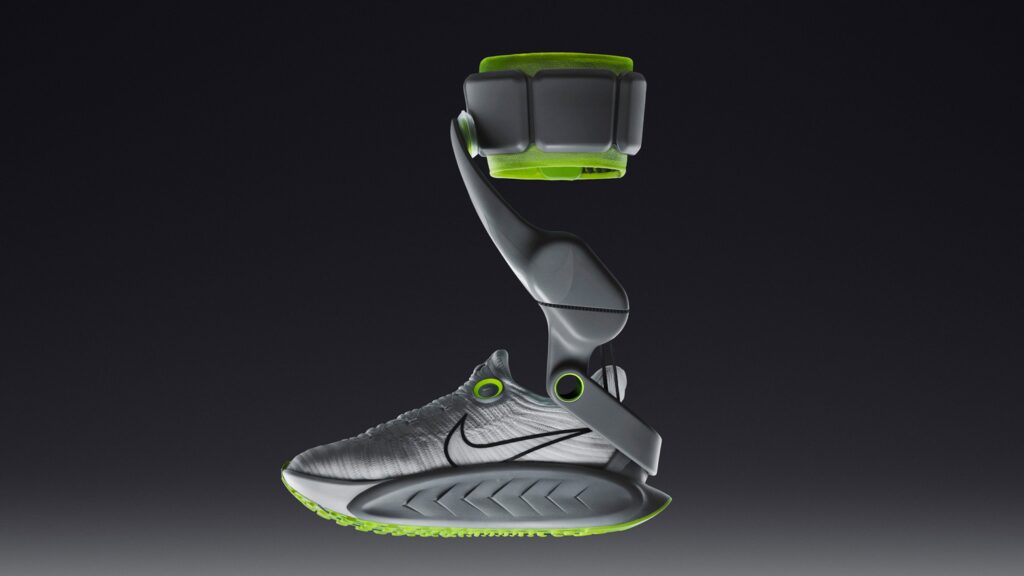
Suit up. Launching in 2028, Nike’s Project Amplify aims to help lay people walk or run further, faster, and with more confidence. Not marketed for competition, the system—a carbon-plated sneaker with titanian calf shells—claims enough battery life for a 10K.
Making a splash at CES 2026, units from Dnsys and Ascentiz promise to lower metabolic and joint stress of outdoor excursions, while China’s Hypershell is coming for cycling, claiming to boost leg strength by 40% and cut exertion by 30%.
General motors. While widely supported for workplace safety—much like the topics of BCIs, designer babies, and AI-fueled obsolescence—36% say the non-medical exoskeletons are a line society shouldn’t cross. Interestingly, despite 3M US recreational athletes using PEDs, only 20% of Americans were in favor of using augmenting tech as of 2022.
Looking ahead: The next step in micromobility, wearable mods will take users beyond the bounds of their bodies. For recreational use, society will need to grapple with the physiological advantages gained versus human potential atrophied.