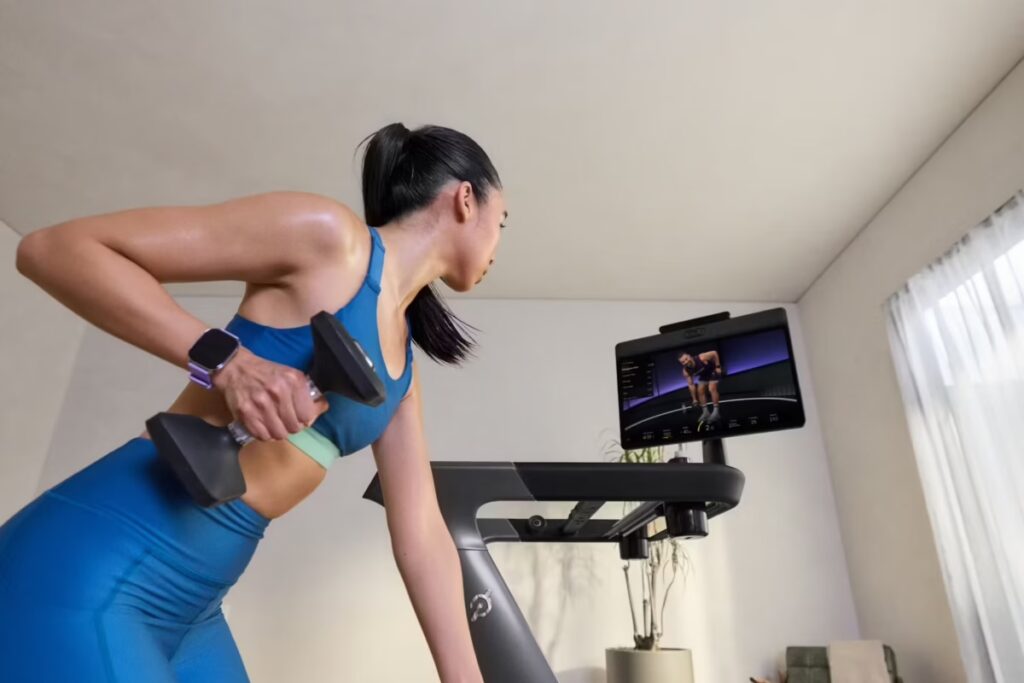
Connected fitness evolves beyond equipment.
The latest: Peloton revamped its hardware, software, and content, betting on AI and soft wellness.
Big swivel. Equipment upgrades included swiveling display screens and integrated form-tracking cameras. Part of a broader AI push, the all-new Peloton IQ promises to personalize training plans based on biometrics and workout data.
Expanding content, it acquired mindfulness app Breathwrk, added MSK workouts, tapped Halle Berry’s Respin Health for menopause courses, and plans more HYROX training plans.
Uphill climb. CEO Peter Stern called the move a “relaunch,” aiming to combat high churn and slowing demand. But, with price hikes across hardware, memberships, and app subscriptions, investors weren’t sold — shares slid after the announcement.
Smart play. As social fitness outpaces solo workouts, equipment makers are reorienting around personalization, product portfolios, and efficiency.
Tonal added AI-optimized programs, iFIT acquired Reform RX, and Hydrow’s scoring workout effectiveness. Scaling content and coaching, Echelon acquired FORTË and FlexIt. Rolling up, FORME parent Interactive Strength bought Wattbike, while smart strength startup Vitruvian filed for bankruptcy.
Punchline: AI upgrades and premium add-ons won’t fix connected fitness, especially if prices keep climbing. To endure, brands like Peloton must move beyond machines — building ecosystems that deliver tangible results, across strength, recovery, and longevity.