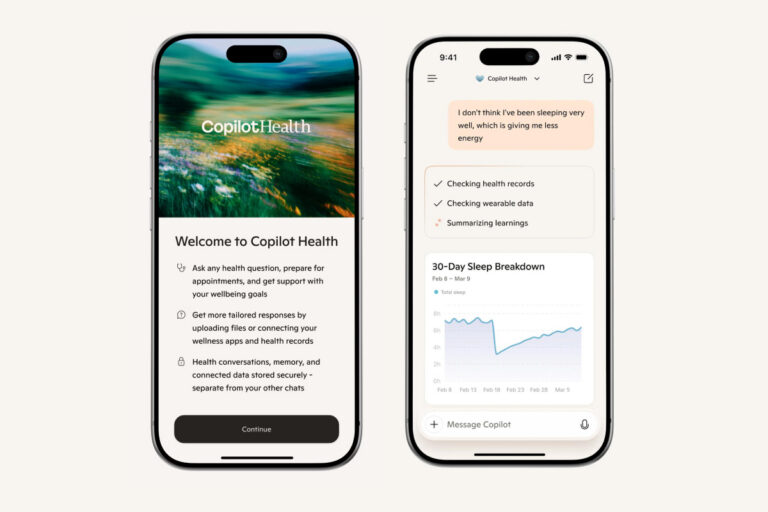
As financial pressures rise, health and well-being remain nonnegotiable.
While consumers trade down on discretionary apparel and dining out, wellness spending continues to climb — with public companies across tech, fitness, and telehealth posting standout quarters.
FTNESS
Life Time
Life Time Q3 revenue grew ~13% YoY to $782.6M, while net income jumped 147% — driven by strong in-center utilization, particularly personal training.
Raising full-year guidance to nearly $3B, Life Time expects to end with 10 new centers, including its NYC high-performance lab.
Expanding the ecosystem, LT wrapped its inaugural fitness competition, is rolling out athletic reformer Pilates nationwide, and plans to open additional MIORA longevity clinics in 2026.
Peloton
Despite a 6% YoY revenue decline and loss of 164K connected fitness subscribers, Peloton recorded a second consecutive profit—nearly $14M—in fiscal Q1.
Approaching its hottest sales season, it’s bullish on a revamped product lineup, AI agents, and partnerships with HYROX, Twin Health, and more. But its product recall of 870K bikes might ding consumer confidence.
Planet Fitness
Beating expectations, the low-cost gym operator’s revenue jumped 13% YoY on solid same-stores sales.
Buoyed by 35 new openings during the quarter, equipment sales to existing franchisees carried the segment as gyms upgrade facilities for strength and longevity.
CEO Colleen Keating raised outlooks while teasing a revamped Black Card tier, adding dry cold plunge and red light therapy.
Xponential Fitness
Following divestitures of CycleBar, Rumble, and weight loss clinic Lindora, quarterly revenue slipped 2% to $78M, with slight same-store sales declines.
Now centered on five core brands, new CEO Mike Nuzzo hopes to attract private equity to scale franchise groups—particularly its “flagship brand” Club Pilates— while launching new YogaSix formats and expanding BFT internationally. Guidance calls for ~180 openings and $300M in 2025 revenue.
Technogym
Reporting earnings YTD, the Italian fitness equipment maker notched €708.5M, a 14% YoY jump fueled by double-digit growth in both commercial and consumer segments
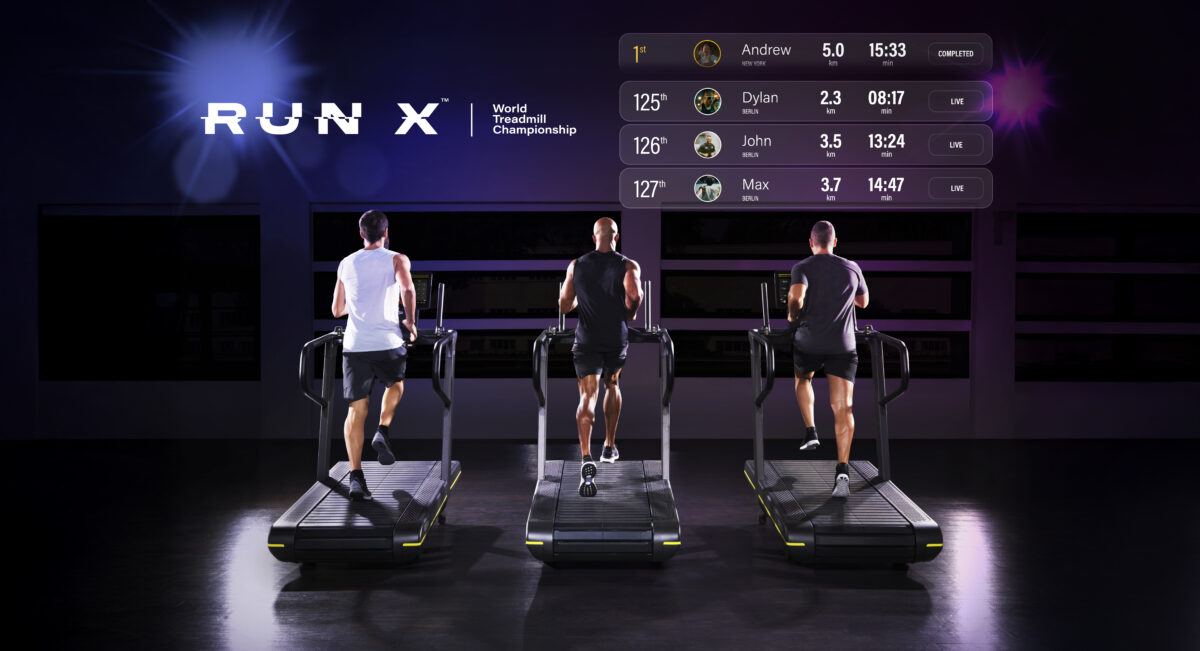
Advancing its AI diagnostics ecosystem, the brand deepened partnerships with Oura and launched a global treadmill racing championship while cementing its role at the intersection of fitness and healthcare.
But, despite strong growth, it expects a slowdown in Q4 on international headwinds and increased competition.
Garmin
Garmin hit a record $1.8B in revenue, with its fitness segment increasing 30% YoY.
Ahead of the holidays, it debuted a satellite-enabled fēnix 8 Pro watch, new cycling computers, and next-gen Venu 4 — while launching automatic lifestyle activity logging.
Pushing integration, it’s powering metrics on Meta’s new Oakley smartglasses, piloting maternal health programs with King’s College, and staved off a lawsuit from long-time partner Strava.
DIGITAL HEALTH

Hims & Hers
The telehealth platform’s revenue notched up $49% to $599M and a net income of ~$16M.
Reaffirming its ambition to surpass$6.5B in revenue by 2030, it’s investing in diagnostics—including developing its own lab infrastructure—while entering oral TRT and menopause care.
Seeking to grow its 2.47M customer base, it’s pursuing international expansion. Despite launching compounded GLP-1 microdosing programs and a previous fallout with Novo Nordisk, it’s in advanced talks for the Danish drugmaker’s forthcoming obesity pill.
Hinge Health
Hinge Health’s revenue rose 53% YoY to $154.2M while surpassing 1.5M lifetime members.
According to CEO Daniel Perez, it’s leaning into AI tools to improve profitability, including a joint health-scoring movement tracker and in-app care copilot. Filling gaps, it launched an IRL provider network of PT clinics and imaging centers, with ambitions to scale
Bullish on automating other care delivery beyond MSK, it’s pursuing M&A and raising its EOY outlook to ~$573M.
Omada Health
The multispecialty health platform grew 49% YoY, hitting $68M, while narrowing losses and swinging to a positive EBITDA. Membership ticked up 53%, driven by cardiometabolic programs.
Announced in tandem, Omada will begin prescribing GLP-1s in 2026. Already working with patients, it debuted Meal Map, an AI nutrition feature focused on nutrient quality over calories while committing to further AI investment tying treatments together for whole-person care.
FOOD & BEV
CAVA
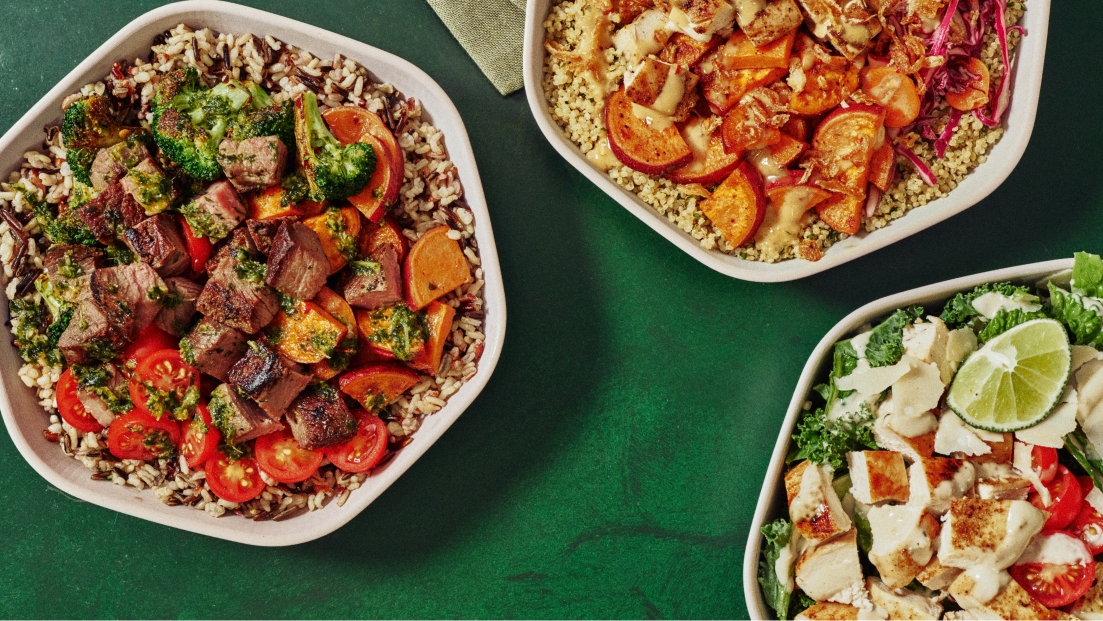
CAVA noted $289M in Q3, a 20% YoY gain, but same-store sales slowed and profit fell from prior year on flat foot traffic. Slumping, CEO Brett Schulman noted its core 25–35-year-old clientele’s pullback — with strained budgets leading to more home-cooked meals.
Determined to avoid significant price increases, the fast-casual believes its value proposition on ingredients and better-for-you menu will keep its revenue growing 16% annually.
Sweetgreen
Fading with the same crowds, Sweetgreen reported $172.4M in revenue, a 0.6% YoY decrease with a 9.5% dip in same-store sales and 11.7% fall in traffic.
Discontinuing its highly promoted Ripple Fries, it’s all in on the protein generation, expanding portions of chicken and tofu by 25% and launching a macro-tracking app tool.
Freeing up cash, it sold automated kitchen startup Spyce to integrated food service platform Wonder for $186M, licensing back the technology as it expands robotic operations.
CELSIUS
The better-for-you energy drink maker topped $725M in Q3 revenue, significantly boosted by its acquisition of Alani Nu — whose retail sales grew 114% YoY.
Along with PepsiCo upping its stake and broadening distribution, CELSIUS took the reins of Rockstar Energy, bringing its energy drink portfolio’s market share to 20.8%. As rival Monster picks up the pace, it’s doubling down on health-focused messaging and boosting international growth.
SPORTSWEAR

NIKE
NIKE’s revenues were up 1% to $11.7B in its fiscal first quarter reported in September, with North America, wholesale, and running segments driving an expected bounce-back.
Aligning with CEO Elliott Hill’s Sport Offense strategy, the company restructured and launched its first stateside Jordan Brand World of Flight retail experience. Feeling the hype of old, it unveiled performance innovations, fast-tracked an ultracushioned running shoe, dropped its NikeSKIMS line, and expanded distribution of NIKE STRENGTH equipment.
adidas
The German sportswear company notched a record €6.6B in quarterly revenue, gaining 12% YoY despite tariff headwinds and consumer uncertainty.
Acquiring cultural clout, the brand dropped collabs with Sporty & Rich and outfitted the Oasis’s return concert. Noting gains in all categories, from retro-styled lifestyle apparel to soccer cleats and running gear, adidas raised its 2025 outlook.
On the Rack
Under the same pressures, global activewear players are navigating what’s next. In the midst of a long-term restructuring plan, Under Armour’s revenues slid 5% to $1.33B, with a net loss of $19M, while PUMA is in a “reset phase,” aiming to offset a sales decrease by 10.4% by reupping its HYROX contract early.
A tale of two challengers, lululemon’s December report will reveal whether its gloomy outlook was justified, while Swiss performance brand On’s earnings are expected to confirm its cultural moment.