Urban design is becoming healthcare infrastructure.
What’s happening: MIT researchers used AI to analyze 28K+ US neighborhoods, creating a blueprint for designing healthier communities.
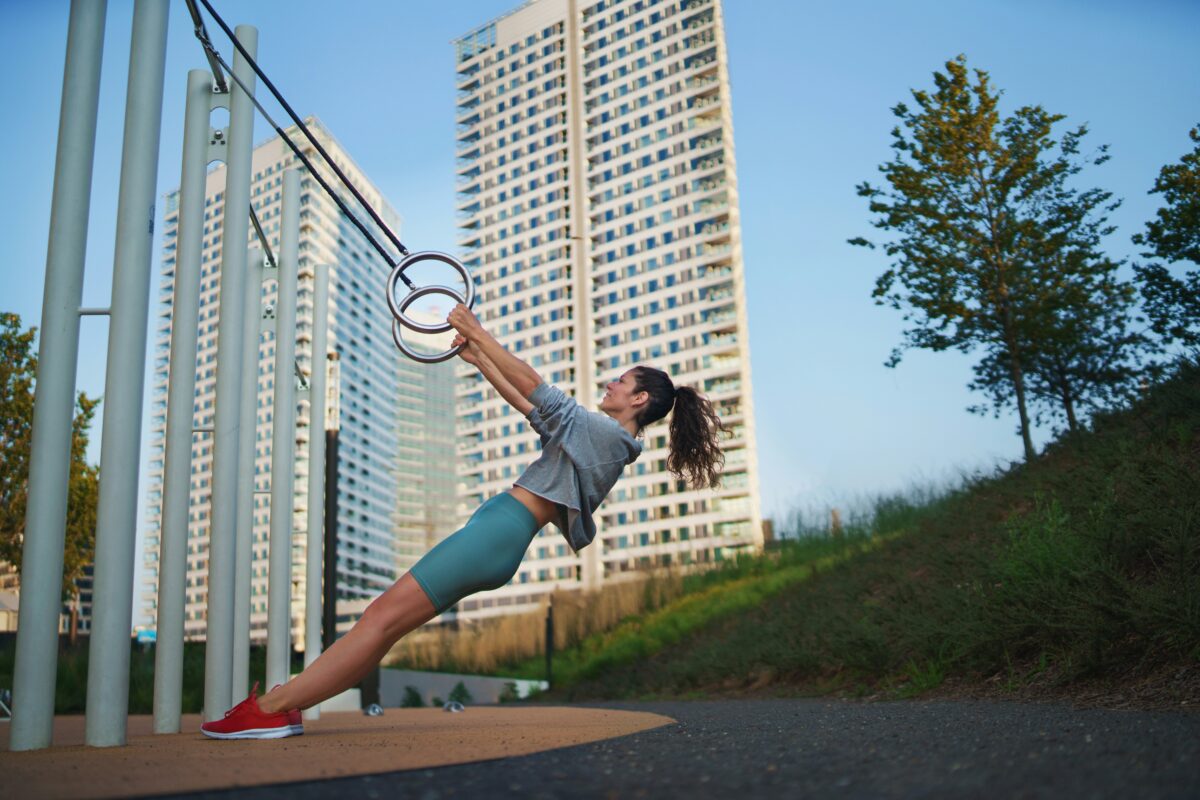
Prevention plan. The study identified a common formula for better physical and mental health: connected streets, mixed-use development, abundant greenery, walkable amenities, and accessible public spaces.
High-impact. Beyond identifying what works, the framework helps prioritize investments where they’ll have the greatest impact, with the same improvements delivering up to 4x greater health gains in underserved neighborhoods.
Punchline: The future of preventative care isn’t just prescribed; it’s designed. Wellness developments can raise the bar, but the biggest health gains will come from improving the neighborhoods people already call home.
We break down how fitness, wellness, and healthcare are converging — and what it means for business, culture, and capital.
No thanks.
A smarter way to track the future of health.
Built for founders, executives, investors, and senior operators.
Subscribe to Fitt Insider
{"head":"<script>(function(w,d,s,l,i){w[l]=w[l]||[];w[l].push({'gtm.start':\r\nnew Date().getTime(),event:'gtm.js'});var f=d.getElementsByTagName(s)[0],\r\nj=d.createElement(s),dl=l!='dataLayer'?'&l='+l:'';j.async=true;j.src=\r\n'https:\/\/www.googletagmanager.com\/gtm.js?id='+i+dl;f.parentNode.insertBefore(j,f);\r\n})(window,document,'script','dataLayer','GTM-KV7LDXC');<\/script>\r\n<!-- End Google Tag Manager -->\r\n<script>(function(w,d,s,l,i){w[l]=w[l]||[];w[l].push({'gtm.start':\r\nnew Date().getTime(),event:'gtm.js'});var f=d.getElementsByTagName(s)[0],\r\nj=d.createElement(s),dl=l!='dataLayer'?'&l='+l:'';j.async=true;j.src=\r\n'https:\/\/www.googletagmanager.com\/gtm.js?id='+i+dl;f.parentNode.insertBefore(j,f);\r\n})(window,document,'script','dataLayer','GTM-T7J5HFB');<\/script>\r\n<!-- Meta Pixel Code -->\r\n<script>\r\n!function(f,b,e,v,n,t,s)\r\n{if(f.fbq)return;n=f.fbq=function(){n.callMethod?\r\nn.callMethod.apply(n,arguments):n.queue.push(arguments)};\r\nif(!f._fbq)f._fbq=n;n.push=n;n.loaded=!0;n.version='2.0';\r\nn.queue=[];t=b.createElement(e);t.async=!0;\r\nt.src=v;s=b.getElementsByTagName(e)[0];\r\ns.parentNode.insertBefore(t,s)}(window, document,'script',\r\n'https:\/\/connect.facebook.net\/en_US\/fbevents.js');\r\nfbq('init', '605118897773201');\r\nfbq('track', 'PageView');\r\n<\/script>\r\n<noscript><img height=\"1\" width=\"1\" style=\"display:none\"\r\nsrc=\"https:\/\/www.facebook.com\/tr?id=605118897773201&ev=PageView&noscript=1\"\r\n\/><\/noscript>\r\n<!-- End Meta Pixel Code -->","body":"<!-- Google Tag Manager (noscript) -->\r\n<noscript><iframe src=\"https:\/\/www.googletagmanager.com\/ns.html?id=GTM-KV7LDXC\"\r\nheight=\"0\" width=\"0\" style=\"display:none;visibility:hidden\"><\/iframe><\/noscript>\r\n<!-- End Google Tag Manager (noscript) -->\r\n\r\n<!-- Google Tag Manager (noscript) -->\r\n<noscript><iframe src=\"https:\/\/www.googletagmanager.com\/ns.html?id=GTM-T7J5HFB\"\r\nheight=\"0\" width=\"0\" style=\"display:none;visibility:hidden\"><\/iframe><\/noscript>\r\n<!-- End Google Tag Manager (noscript) -->","footer":"<script type=\"text\/javascript\" id=\"linkedin-script\">\r\n_linkedin_partner_id = \"4087129\";\r\nwindow._linkedin_data_partner_ids = window._linkedin_data_partner_ids || [];\r\nwindow._linkedin_data_partner_ids.push(_linkedin_partner_id);\r\n<\/script><script type=\"text\/javascript\">\r\n(function(l) {\r\nif (!l){window.lintrk = function(a,b){window.lintrk.q.push([a,b])};\r\nwindow.lintrk.q=[]}\r\nvar s = document.getElementsByTagName(\"script\")[0];\r\nvar b = document.createElement(\"script\");\r\nb.type = \"text\/javascript\";b.async = true;\r\nb.src = \"https:\/\/snap.licdn.com\/li.lms-analytics\/insight.min.js\";\r\ns.parentNode.insertBefore(b, s);})(window.lintrk);\r\n<\/script>\r\n<noscript>\r\n<img height=\"1\" width=\"1\" style=\"display:none;\" alt=\"\" src=\"https:\/\/px.ads.linkedin.com\/collect\/?pid=4087129&fmt=gif\" \/>\r\n<\/noscript>\r\n\r\n<script async data-id=\"101397610\" src=\"\/\/static.getclicky.com\/js\"><\/script>"}
We use cookies
We use necessary cookies to make this site work. With your consent, we also use analytics and advertising technologies to improve the site and measure marketing.







![ANIMAL [a listening gym] installation](https://insider.fitt.co/wp-content/uploads/2026/08/ANIMAL-Exhibit-e1786733524804-768x512.png)