
Grow your business with HSA/FSA
Invisible diagnostics are health’s next domain.
Groundwork
Adopted by 44% of Americans, wearables are a staple in wellness crowds.
Yet, those who might benefit most—including older adults, low-income populations, and individuals with cardiovascular disease—are least likely to use them.
Not a criticism, the “worried well” paved the way for the personal health movement, but population-wide outcomes will require designing for different personas and problems.
Incognito
Evolving beyond status symbols and wellness metrics, the next wave of tools will be both invisible and clinical, catching illness in its earliest stage. Alleviating PCPs’ burden, empowering patients, and sidestepping shady billing practices, DTC disease monitoring is in development.
Throne. Upgrading toilets, Throne’s clip-on device uses a downward-facing camera to capture stool and urine. Translating excretion to insight, it monitors hydration levels and gut health, flagging bladder and prostate issues.
Lura. Attaching to teeth, Lura’s noninvasive microsensor analyzes saliva to track hundreds of markers, from glucose levels to biologics — seamlessly syncing data across a patient-facing app and doctor-driven EMR.
Feno. Connecting oral care and healthcare, Feno’s smart toothbrush removes plaque while warning of inflammation and decay. Beyond aesthetics, it highlights links between periodontal symptoms and broader bodily dysfunction.
Comma. Turning tampons into blood tests, Comma pairs subscription personal care products with a HIPAA-compliant platform, using would-be waste to guide reproductive health.
Lumia. Tracking bloodflow to the head, Lumia’s in-ear tech monitors difficult-to-prove orthostatic conditions like POTS and Long COVID, relieving symptoms and medical gaslighting.
Screenless
With smart contact lenses, gait-tracking insoles, medical hearables, magic mirrors, and implantables likely on the way, we’re entering the era of ambient health intelligence.
Consumers will still need an AI-powered home base to aggregate data across inputs, but the winning interface will be whatever protects against unwanted distraction.
Recognizing screen fatigue, Big Tech is racing to revolutionize human-tech interaction, with OpenAI and legendary Apple designer Jony Ive notably teaming on a secret device.
Futureproof
High-performance gadgets appeal to select circles, but many don’t care to quantify themselves as a flex. Still, everyone has a stake in averting disease.
An antidote to over-optimization and tech addiction, the future of health tracking should be seamlessly integrated into everyday products, making prevention a passive pursuit.
Giving people time and attention back while alleviating health anxiety, invisible tech could be the industry’s biggest breakthrough yet.
Looking ahead: High-value, hard to capture, and dominated by incumbents, disease monitoring needs an overhaul. The next unicorns won’t be wellness devices — they’ll be reimbursable diagnostics with lifestyle-level UX.
🎙 On the Podcast
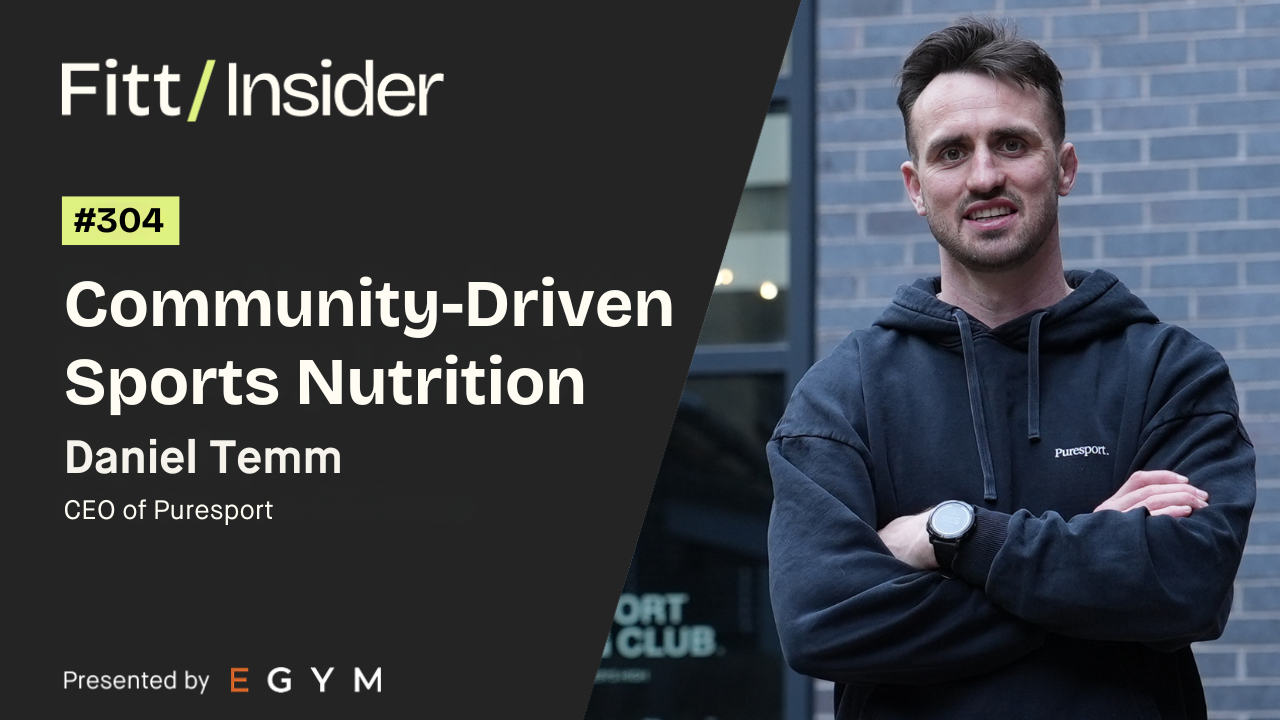
Puresport CEO Daniel Temm discusses social wellness x sports nutrition.
Founded on CBD for athletes, the UK company has grown into a community-driven performance supplement brand centered on sustainable well-being.
We also cover: evolving the product line, bootstrapping the company, and choosing emotional connection over performance marketing.
Listen to today’s episode here
📈 Run clubs reach record highs
According to Strava, run club creation on its platform is surging, with the US up 4x YoY, France leading Europe at 6.5x, and Brazil growing 8.8x.
Friend zone. Running crews now account for 39% of all Strava groups, with most of Gen Z joining for social connection. Packing physical and mental benefits, those who train together perform better and are less stressed than those going it alone.
Groupthink. While run clubs aren’t new, the motivations are. For younger generations, weekly jogs are about relationships, self-expression, and culture as much as performance.
Looking ahead: Still climbing, social fitness won’t stop at running; expect its ethos to spread through outdoor clubs, rec leagues, and HYROX challenges.
💰 Tap Into the $150B HSA/FSA Market
Make HSA/FSA payments your next revenue driver.
Smart. Powering HSA/FSA spending on health and wellness products, Flex increases average order value by 50% and checkout conversion by 30%.
Simple. Integrating with any checkout flow, its platform eliminates the hassle of paperwork and reimbursement barriers, letting shoppers pay with HSA/FSA cards in seconds.
Seamless. Americans have >$150B in HSA/FSA accounts. With Flex, consumers can spend those funds on your brand, resulting in a 15% average increase in new customers.
Get started today, and see why top brands like Dermstore, Ultrahuman, and Therabody choose Flex.
🧬 Longevity has a branding problem
Personalized, preventative medicine should feel mainstream, but the messaging isn’t landing.
- Most want to live to 90, yet fewer than a third ever discuss “longevity” with their doctor.
- Even though 80% of Americans believe healthtech can extend life, just 18% use it.
Quality vs quantity. Two-thirds say they’d rather die young and live well than live long and be sick. Overindexed on anti-aging protocols and expensive regimens, the category feels like a luxury reserved for the ultra-wealthy — instead of promoting vitality for all.
Human-centered. While 63% approve of regenerative medicine for curing disease, optics get in the way. Stem cells, peptides, and plasma therapies spark pushback when positioned as elite optimization rather than accessible care.
Punchline: Given the choice between a fun life or a long one, most will choose the former. Instead of selling immortality, longevity brands should focus on helping people stay active, pain-free, and present with loved ones well into old age.
📰 News & Notes
- Trail running economy hits $20B.
- On targets strength, hybrid athletes.
- Les Mills unveils next-gen aerobics step.
- Hyatt launches fitness, recovery retreats.
- Gold’s Gym enters Brazil with 60-unit deal.
- Oura onshores manufacturing for US DoD contract.
- Study questions collagen’s beauty, longevity claims.
- AWSOM opens wellness-focused med school in Arkansas.
- Tonum Health releases clinical results for flagship weight loss supplement.
- We already know your next hire: Enlist our specialized recruiting firm to connect with high-performers from Fitt Insider’s community.
💰 Money Moves
US 🇺🇸 / Canada 🇨🇦
Flex, a healthcare commerce company unlocking FSA/HSA eligibility, raised $15M in a Series A.
Supplements maker Feel Goods raised $4.7M in a seed round led by Cutting Horse.
Lightwork Home Health, provider of environmental health testing for residences, acquired UK-based counterpart Universe Health.
PepsiCo invested $585M in better-for-you energy drink maker Celsius, upping its stake to 11%.
Celsius acquired PepsiCo’s US and Canadian operations for Rockstar Energy.
Movement health software developer Model Health raised $1M in a pre-seed round.
Biotech beauty company Debut raised $20M to scale skin longevity formulas.
One Stop Wellness, a culturally sensitive AI food scanner, announced $1M in a funding round.
Painterland Sisters, maker of organic skyr yogurt, landed a “seven-figure” seed round.
RECOVER 180, maker of organic hydration beverages, added investments from NFL stars Travis Kelce and Maxx Crosby.
Onrise, a mental health platform for sports organizations, closed a funding round led by Wildwood Ventures and Crescent Ridge Partners.
Europe 🇪🇺
Seluna, Scottish developer of AI sleep diagnostics, raised ~£640K ($860K) and will enter the US.
UK-based sportswear brand Castore acquired men’s outerwear company Belstaff.
French AI genomic analysis platform SeqOne acquired UK-based genomic data platform Congenica.
Today’s newsletter was brought to you by Anthony Vennare, Joe Vennare, Ryan Deer, and Jasmina Breen.