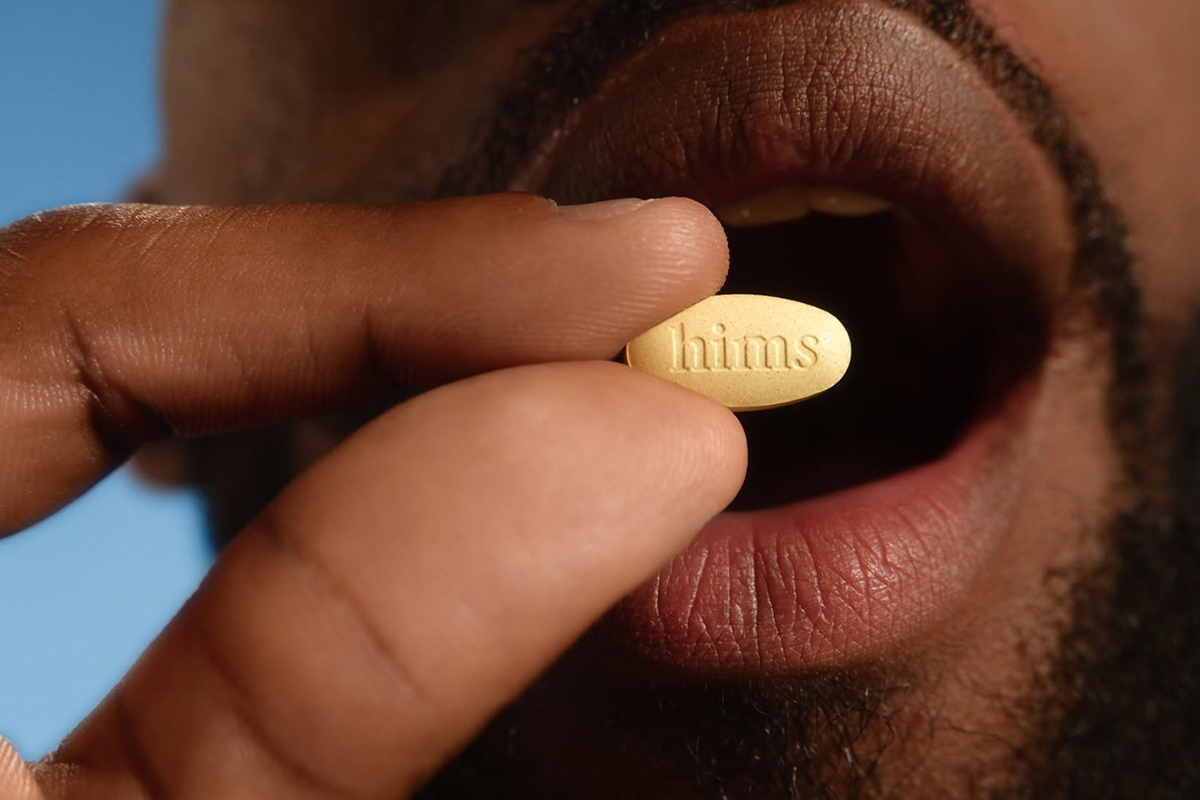
TRT is becoming a philosophy.
Tough Stuff
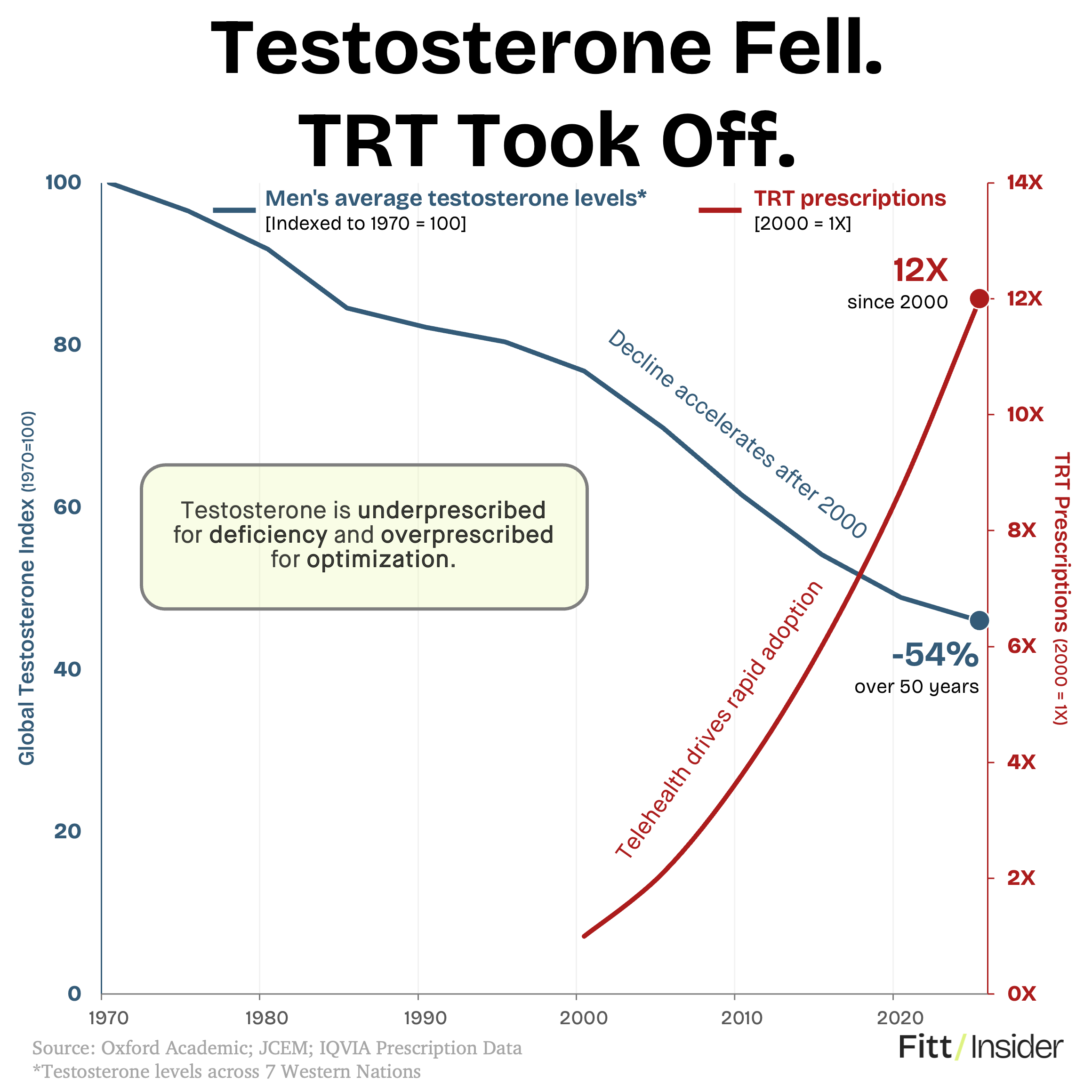
Men’s testosterone levels have fallen 54% over the last 50 years, driven by obesity, chronic stress, and environmental toxins.
Despite low T’s impact on energy, sex drive, mood, and body composition, just one in five eligible men have historically received treatment — a figure that’s climbing.
De-reg. The FDA recently relaxed safety warnings for TRT and menopausal HRT, while MAHA championed testosterone as a solution to various men’s health concerns. Enlisting the military, the US DoD is introducing screening and TRT treatment for service members 30+.
Off-script
Beyond treating deficiency, TRT is becoming a consumer-driven tool for performance, longevity, and modern masculinity.
Red flag. Testosterone prescriptions grew 1,100% between 2000–2025, per IQVIA, despite 65% of men 40+ never testing and ~55% unable to identify low T symptoms. The new pipeline, of the 190K Texans receiving monthly treatment, 40% obtained TRT through compounding pharmacies.
Skirting regulation, some telehealth platforms may be prescribing testosterone to men with normal levels.
Man-making. Entering the longevity stack, Hone Health, Lifeforce, and Joi + Blokes frame low T as a metabolic health issue, while Posterity Health emphasizes fertility-safe dosing.
Upping access, Life MD is readying cash-pay injections, and Rugiet expanded into TRT, while Hims added Marius Pharmaceuticals’ FDA-approved oral version. Creating new care models, Serotonin Centers entered gyms, and Game Day Men’s Health has 1K+ clinics in development.
Betting on natural alternatives, Mars Men landed $27.5M for drug-free supps after serving 400K customers in 1.5 years.
Guy Talk
Occupying two extremes, TRT is underprescribed for deficiency and overprescribed for optimization.
While better diagnostics could aid symptom detection and clinical care, premature prescribing often overlooks foundational interventions like sleep, strength training, nutrition, and reducing environmental exposures.
A concerning trade-off, expanded access could increase use among younger men, potentially suppressing natural testosterone production and lowering sperm counts.
Punchline: Like peptides and GLP-1s, TRT is evolving from a medical therapy into a wellness protocol. As regulations ease, prescribers will have to distinguish between hormonal health and performance enhancement.