
Fitness is richness.
Looking In
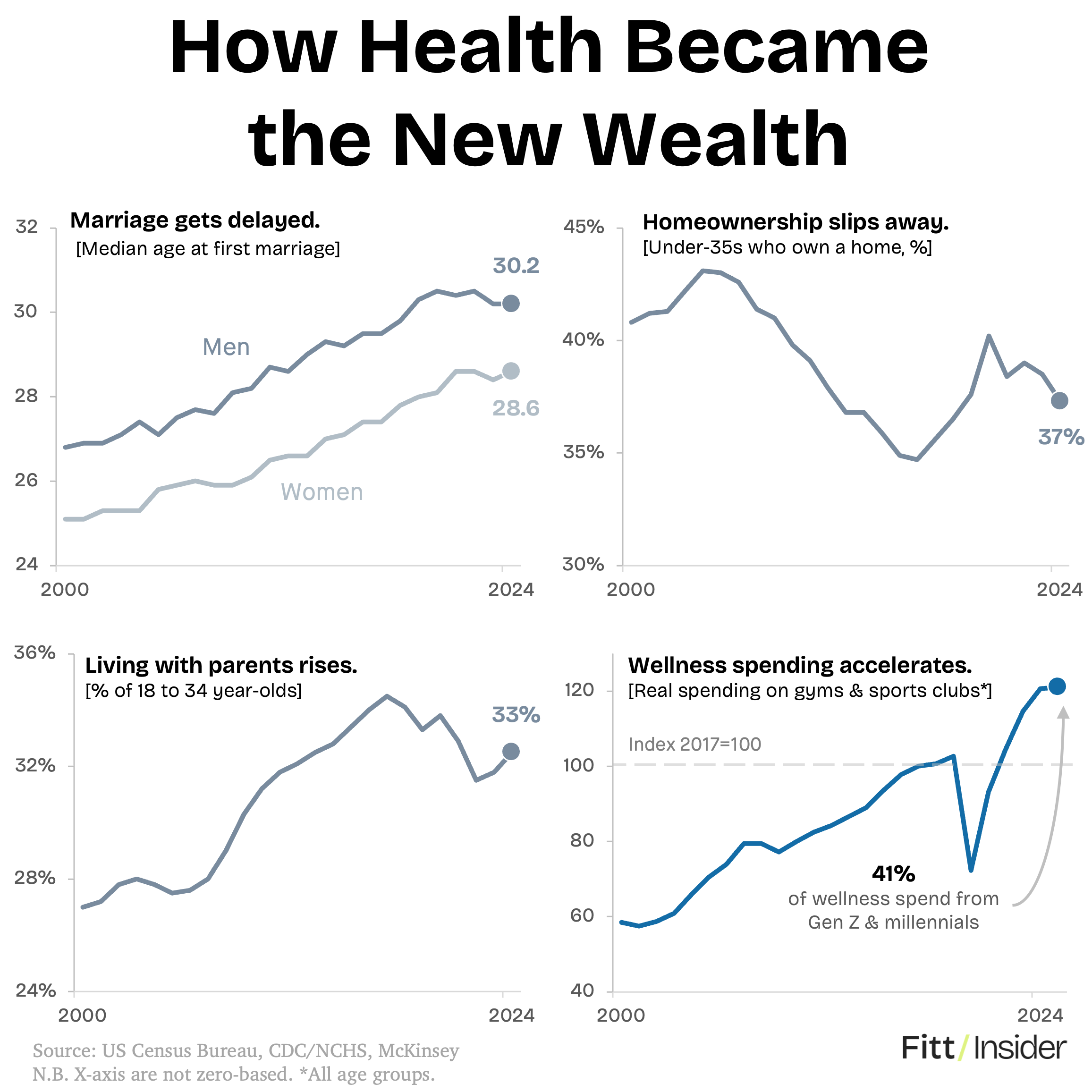
Priced out of the American dream, Gen Z and millennials are delaying conventional milestones.
- Just 22% of young adults own a home.
- <40% see marriage as integral, and only a third are actively dating.
- One in three of under-35s live with their parents, despite 70% being employed.
Lacking material and matrimonial assets, young people have deemed an optimized self the real wealth.
Gym x Life
For Gen Z/millennials, home ownership and having time for self-help are equal measures of success — but they’re more likely to be building muscles than houses.
Under-35s account for nearly half of all US gym memberships and pay the highest monthly dues, with a third saying the gym’s happiness ROI justifies the splurge.
A new rite to adulthood, 36% of 18–24s have signed up — the highest of any cohort ever. Unattached, today’s <40 gym-goers are 33% less likely to be married and 8% less likely to have kids than a decade ago, per HFA.
Sweat equity. Rejecting old-money flexes, most view health as a top status symbol. Self-preservation in a volatile era, they’re investing in controllable aspects of life and finding peer validation through physical pursuits.
Inner circle. Two-thirds would rather spend on workout gear than on a date, but most are still seeking platonic relationships — with 57% joining the gym primarily for community. From group fitness and sauna to run club and active travel, they’re finding companions through embodied experiences and events.
Me-conomy
Ignoring lectures against superfluous purchases, younger gens have defiantly doubled down on wellness, accounting for 41% of category spending.
Constantly under the microscope for drinking habits, mental health, and screen time, Gen Z’s switching the script in an economy that’s letting them down.
Looking ahead: Approaching prime earnings years, Gen Z and millennials have life decisions to make. For many, coming of age in the wellness era puts being rich in life over traditional consumerism.